
New Study Shows Antidepressant Medication Fails to Help Most Depressed Patients

A very interesting study recently published in the Journal of the American Medical Association (JAMA) demonstrated very clearly that when it comes to antidepressant medication, the Emperor is wearing few if any clothes! The researchers did what is called a meta-study or meta-analysis. They searched the research literature for all studies that were placebo-controlled studies of antidepressants when used for depression. That means the studies had to include random assignment to either a medication group or a placebo (sugar pill) group. They eliminated some studies which use a placebo washout condition. (This means the studies first gave patients a placebo, and then eliminated all patients who had a 20% or greater improvement while taking placebo.) When they eliminated all studies that didn’t meet their criteria, they were left with 6 studies of 738 people.

Based on scores on the Hamilton Depression Rating Scale (HDRS), the researchers divided the patients into mild to moderately depressed, severely depressed, and very severely depressed. This is a 17 item scale that is filled out by a psychologist or psychiatrist, and measures various aspects of depression. It is used in most studies of depression. They then analyzed the response to antidepressant medication based on how severe the initial depression was.

The two antidepressants studied were imipramine and paroxetine (Paxil). Imipramine is an older, tricyclic antidepressant, and Paxil is a more modern SSRI antidepressant.

What did they find? They were looking at the size of the difference between the medication groups and the placebo groups. Rather than do the typical thing of just looking at statistical significance, which is simply a measure of whether the difference could be explained by chance, they looked at clinical significance. They used the definition used by NICE (National Institute of Clinical Excellence in England), which was an effect size of 0.50 or a difference of 3 points on the HDRS. This is defined as a medium effect size.

What they found was very disheartening to those who use antidepressant medications in their practices. They divided the patients into three groups based on their initial HDRS scores: mild to moderate depression (HDRS 18 or less), severe depression (HDRS 19 to 22), and very severe depression (HDRS 23 or greater).

For the mild to moderately depressed patients, the effect size was d=0.11, and for severely depressed patients the effect size was d = 0.17. Both of these effect sizes are below the standard description of a small effect which is 0.20. For the patients in the very severe group, the effect size was 0.47 which is just below the accepted value of 0.50 for a medium effect size.

When they did further statistical analysis, they found that in order to meet the NICE criteria of effect size of a 3 points difference, patients had to have an initial HDRS score of 25 or above.  To meet the criteria of an effect size of .50, or medium effect size, they had to have a score of 25 or above, and to have a large effect size, 27 or above.

What does this all mean for patient care? It means that for the vast majority of clinically depressed patients who fall below the very severely depressed range, antidepressant medications most likely won’t help. The sadder news is that even for the very severely depressed, medications have a very modest effect. Looking at the scoring of the HDRS, the normal, undepressed range is 0 to 7. The very severely depressed patients had scores of 25 or above, and a medium effect size was a drop in scores of 3 or more points compared to placebo patients. Looking at the one graph in the paper that show the actual drops in HDRS scores, the medication group had a mean drop of 12 points when their initial score was 25. That means they went from 25 to 13, which is still in the depressed range, although only mildly depressed. Patients who initially were at 38 dropped by roughly 20 points, ending at 18, which is still pretty depressed. And the placebo group had only slightly worse results.

One interesting thing is how strong the placebo effects are in these studies. It seems that for depressions less serious than very severe, placebo pills work as well as antidepressant medication.  Is this because antidepressants don’t work very well, or because placebos work too well? It’s hard to know. Maybe doctors should give their patients sugar pills, and call the new drug Eliftimood!

So in summary, here are the main observations I make from this study.

  • If you are very severely depressed, antidepressants may help, and are worth trying.
  • If you are mildly, moderately, or even severely depressed, there is little evidence that antidepressants will help better than a placebo. You would be better off with CBT (Cognitive Behavioral Therapy), which has a proven track record with less severe depressions, and which has no side effects.
  • Interestingly, CBT is less effective for the most severe depressions, so for these kinds of depressions medication treatment makes a lot of sense.
  • If you are taking antidepressants and having good results, don’t change what you are doing. You may be wired in such a way that you are a good responder to antidepressants.
  • If you have been taking antidepressants for mild to severe (but not very severe) depression, and not getting very good results, this is consistent with the research, and you might want to discuss alternative treatments such as CBT with your doctor. Don’t just stop the medications, as this can produce withdrawal symptoms, work with your doctor to taper off them.
  • Even in very severely depressed patients, for whom antidepressants have some effects, they may only get the patient to a state of moderate depression, but not to “cure”. To get to an undepressed, normal state, behavioral therapy may be necessary in addition to medications.
  • How do you find out how depressed you are? Unfortunately there is no online version of the HDRS for direct comparison. You may want to see a professional psychologist or psychiatrist if you think you might be depressed, and ask them to administer the HDRS to you.  There are also online depression tests, such as here and here. If you score in the highest ranges you might want to consider trying antidepressant medications, if you score lower you might want to first try CBT.
  • The most important thing is not to ignore depression, as it tends to get worse over time. Get some help, talk to a professional.

I’m off to take my Obecalp pills now, as it’s been raining here in Northern California for more than a week, and I need a boost in my mood. (Hint: what does Obecalp spell backwards?)

Copyright © 2010 Andrew Gottlieb, Ph.D. /The Psychology Lounge/TPL Productions
New Study Finds the Best Pharmacological Stop Smoking Solution: (Hint, it’s not what you’d think)

A new study at the Center for Tobacco Research and Intervention, School of Medicine and Public Health, University of Wisconsin, Madison, compared all except one of the current drug treatments that help with quitting smoking. They looked at the following treatments and combined treatments:

  • “bupropion SR (sustained release; Zyban, GlaxoSmithKline), 150 mg twice daily for 1 week before a target quit date and 8 weeks after the quit date;
  • nicotine lozenge (2 or 4 mg) for 12 weeks after the quit date;
  • nicotine patch (24-hour, 21, 14, and 7 mg titrated down during 8 weeks after quitting;
  • nicotine patch plus nicotine lozenge;
  • bupropion SR plus nicotine lozenge; or
  • placebo (1 matched to each of the 5 treatments).”

Everyone received six 10- to 20-minute individual counseling sessions, with the first 2 sessions scheduled before quitting.

What were the results?

Three treatments worked better than placebo during the immediate quit period: the patch, bupropion plus lozenge, and patch plus lozenge.

At six months, only one treatment was effective; the nicotine patch plus nicotine lozenge. The exact numbers , as confirmed by carbon monoxide tests, were: “40.1% for the patch plus lozenge, 34.4% for the patch alone, 33.5% for the lozenge alone, 33.2% for bupropion plus lozenge, 31.8% for bupropion alone, and 22.2% for placebo.”

So we see that the combined nicotine substitution therapy worked best, followed closely by either nicotine substitute alone. Zyban or Welbutrin (bupropion) was a bust, no more effective than the simple nicotine lozenge. The only advantage to Zyban would be if one prefers not to use nicotine substitutes.

Now I mentioned that they omitted one drug treatment, which is the drug Chantix (varenicline). This is probably because the drug is a nicotine receptor blocker, so wouldn’t have made sense to combine with nicotine substitutes. Also, there have been some disturbing case reports of people having severe depressive reactions to Chantrix.

Of course, there was one glaring omission that any card-carrying psychologist would spot in a moment–the lack of a behavior therapy component. Giving 6 ten minute sessions is hardly therapy. I would have liked to see true smoking cessation behavior therapy combined with the drug treatments.

So, if you’re trying to quit smoking, combine nicotine patches with nicotine lozenges, sold in any pharmacy. If you do, you have a 40 percent chance of succeeding at 6 months.

Now I am off to have a cigarette….just kidding.

Study: http://cme.medscape.com/viewarticle/712074_print

Copyright © 2009/2010 Andrew Gottlieb, Ph.D. /The Psychology Lounge/TPL Productions

Which Anti-depressant Should You Take? Now We Know

Accepted wisdom for a number of years has been that all modern anti-depressants work equally well, and that drug selection depends more on the side effect profile desired. Thus a lethargic patient might benefit from an activating antidepressant like Prozac, and an anxious patient would be better off with Paxil. Often prescribing practices are based on individual doctors’ preferences and biases. But a newly published study suggests that this may be wrong. There may be antidepressants that not only work better, but are easier for patients to tolerate.

A terrific new study was recently published in the Lancet medical journal. A team of international researchers, led by Andrea Cipriani at the University of Verona in Italy, reviewed 117 studies of antidepressants which included 25928 patients, two-thirds of whom were women. These studies, done all around the world, compared various antidepressants to either placebo or other antidepressants.

The researcher compared the results of 12 new generation antidepressants in terms of efficacy and acceptabiltiy. They defined efficacy as the proportion of patients who improved at least 50% on a depression rating scale by 8 weeks of treatment. They defined acceptability as the proportion of patients who did not drop out of the study. They made an attempt to adjust for dosages, and did very sophisticated statistical analyses to compare all of the drugs. They used fluoxetine (Prozac) as the common comparison drug, since it has been on the market for the longest time.

What were the results? The winners in terms of short term effectiveness were: (drum roll) mirtazapine (Remeron), escitalopram (Lexapro), venlafaxine (Effexor), and sertraline (Zoloft). The winners in terms of acceptability were: escitalopram (Lexapro), sertraline (Zoloft), citalopram (Celexa), and bupropion (Wellbutrin) were better tolerated than other new-generation antidepressants. Note that the overall winners for effectiveness combined with tolerability were escitalopram (Lexapro) and sertraline (Zoloft). Two of the best drugs in terms of effectiveness (mirtazapine (Remeron) and venlafaxine (Effexor)) were not among the best tolerated medicines.

The losers in terms of both effectiveness and tolerability were reboxetine (Edronax), ?uvoxamine (Luvox), paroxetine (Paxil), and duloxetine (Cymbalta). The worst drug of all was reboxetine (Edronax).

So what about cost? I’ve developed a spreadsheet of all of the drugs’ costs based on a 30 day supply, paying full retail price at Costco pharmacy, and using generic equivalents when available. Of the winners in terms of effectiveness and tolerability, the clear cost winner was sertraline (Zoloft), at $12 a month. The other winner, escitalopram (Lexapro), was a loser in terms of cost at $88 a month! The other winners in terms of effectiveness were quite cost effective too, with mirtazapine (Remeron) at $14 a month, and venlafaxine (Effexor) at $28 a month.

So what should doctors and patients do? For patients, the two best drugs appear to be escitalopram (Lexapro) and sertraline (Zoloft), with sertraline the clear winner if you pay much for prescription drugs. Doctors might want to consider costs as well, as this can help with overall health care inflation. If you can tolerate the side effects, consider trying mirtazapine (Remeron), or venlafaxine (Effexor).

Now there are of course a few caveats about this study. It is possible that another meta-analysis could find different results. One criticism was that the study only looked at effectiveness over 8 weeks of treatment. It is possible that some drugs work more slowly, and at 12 or 16 weeks might have different results. But most patients want results in two months or less, so this is not a major criticism.

Another issue is funding bias. Although none of the authors of this study were paid by drug companies, many of the studies they analyzed were funded by drug companies, and may have reflected some bias. But for now, this is the best information we have in terms of effectiveness and toleration of antidepressant medications.

So who’s the winner? Sertraline (Zoloft) was the clear winner by effectiveness, tolerability, and cost!

Should you change medications if you are not on one of the winners? No, of course not. If your medication is working, don’t change it. But if it’s not working, then talk with your doctor about switching.

And no, I don’t receive any funding or sponsorship from any drug companies…


Here’s the table of drug price comparisons.
Comparison of Antidepressant Costs for 30 Day Supply (Costco Pharmacy, Generic Equivalents if possible)
Bolded Drugs were most effective

Drug            Generic Name         Cost          Dose(mg)

Celexa             citalopram                   $3                 40
Prozac             fluoxetine                    $6                  20
Zoloft             sertraline                       $12             100
Remeron     mirtazapine                    $14               30
Luvox              fluvoxamine               $24             100
Effexor         venlafaxine                    $28                75
Welbutrin      bupropion                   $74             200
Lexapro       escitalopram                 $88                10
Paxil                paroxetine                   $91             37.5
Cymbalta       duloxetine                   $128              60


Copyright © 2009 Andrew Gottlieb, Ph.D. /The Psychology Lounge/TPL Productions

How to Deal with Teenage Depression: A New Study of Adolescent Depression and its Treatment

A new study reported in the Journal of the American Academy of Child and Adolescent Psychiatry found some interesting results of a study of teenage depression and its treatment.

This study of 439 teenage children with major depression, done at the University of Texas Southwestern Medical Center at Dallas tested anti-depressant medication (fluoxetine or Prozac), cognitive behavioral therapy (CBT), and a combination of both (COMB). They found that only 23% of the patients had their depression cured by 12 weeks of therapy. But 9 months of therapy was much more effective, with 60 percent going into remission.

The bad news though is that this means that almost half of the teenagers (40%) were still depressed after 9 months of therapy.

The good news is in terms of relapse. Of those who responded quickly to treatment, two-thirds retained the benefits of treatment over 9 months. The same was true of those who took longer to respond.

Which treatment was better? That is an interesting picture.

It depends at which time point you are looking at. At 12 weeks, the results for percentage fully remitted (cured) of depression were: combined drug and CBT therapy (37%), drug therapy only (23%), and CBT therapy only (16%). The combined therapy was significantly better than the other therapies. But note that overall, only 23% of the teenagers had recovered at 12 weeks, which means that 77% were still suffering!

But at nine months the outcomes look quite different. The combination therapy is still the best, but by less of a margin. The results for remission at at 9 months were: combination, 60%; drug, 55%; cognitive-behavioral therapy, 64%; and overall, 60%. By 24 weeks all the treatments were working well. But a full 40% of the teenagers were still depressed.

So the right answer to the question of which treatment works better is neither. Both drugs and cognitive behavioral therapy were equally effective, over the long term. But the combination of both was worked more quickly. As the researchers said, “choosing just one therapy might delay many teenagers’ recovery by 2 or 3 months.” As the saying goes, candy is dandy, but liquor is quicker, and we might conclude that drugs or CBT are dandy, but combined therapy is quicker.

So what does this mean to parents of depressed teenagers? Here are my takeaway messages:

  1. Don’t expect treatment for depression to work quickly. It may take more than 9 months of weekly treatment before your teenager responds to therapy. This means at least 40 sessions of therapy.
  2. Be patient, and set reasonable expectations for both yourself and for your child. Tell them that therapy will help, but it may take a while. Let support networks such as school counselors or trusted teachers know to be patient.
  3. Although medications and cognitive behavioral therapy were equally effective in the long run, the combination of both tended to work much more quickly. So if you can afford it, and have access to good practitioners who do cognitive behavioral therapy, use both.
  4. Be aware that in other studies, the relapse rate for medication treatment of depression was significantly higher than for cognitive behavioral therapy, once the medications are discontinued. So choosing medications only may increase the risk that your teenager will relapse into depression.
  5. Be aware that much teenage depression can be a reaction to social environments. This includes the family, the school, and peers. Be sure that your teen’s therapist is attuned to family, school, and peer issues. They should meet with the whole family at least several times.
  6. Take teenage depression seriously. It’s not just a phase. Teenage depression, when serious, can greatly increase the risk of suicide. All suspected depression should be evaluated by a professional and treated if present.

Copyright © 2009 Andrew Gottlieb, Ph.D. /The Psychology Lounge/TPL Productions

SOURCE: Journal of the American Academy of Child and Adolescent Psychiatry, February 2009 . And December 2006 issue too .

Protecting Your Brain (and Your Heart) With Fish Oil

Protecting Your Brain (and Your Heart) With Fish Oil

Fish oil to protect brainA fascinating idea is how to protect your brain using simple nutrients. Can we protect our brains from depression, Alzheimer’s, even stroke using simple nutrients or over the counter supplements? I’ve written about the continuing search for predictors of Alzheimers here, but what if a simple nutrient could help prevent it? 

The Wall Street Journal just published an interesting article about using fish oil to treat or prevent a variety of illnesses. They even summarize the findings with recommended doses of fish oil. For instance, to prevent heart disease, they recommend one gram of EPA or more per day. For optimum brain health, take one-half gram of DHA or more. Even Rheumatoid arthritis may respond to 2 grams or more of fish oil.

Fish oil contains omega-3 fatty acids, of which there are two main ones; EPA (eicosapentaenoic acid) and DHA (docosahexaenoic acid). Repeat after me if you want to really impress your physician: “eye-coh-sah-pent-ah-eh-no-ick  acid” and “doh-coh-sah-hex-ah-eh-no-ick acid”. Now you see why articles always say EPA and DHA!

There is a very interesting tie in with DHA and Alzheimer’s disease, as explained by an article on medicinenet.com.  It turns out that people with Alzheimer’s disease (AD) tend to have low levels of a brain protein called LR11, and about 15% of those with AD have a gene mutation that reduces LR11. LR11 works to clear the brain of amyloid proteins, which are implicated in the production of beta-amyloid plaque that clogs the neurons of those with AD.  Scientists tested DHA in rodents and in cultures of brain cells and found that DHA causes a higher production of LR11.

So should you be taking fish oil capsules, and how many, and which brand? I’d say if you eat oily fish like salmon 3 times a week or more, don’t worry about it. But for the rest of us (all of us?), it may make sense to add fish oil capsules to our vitamin regimen. A 1999 Italian study found that adding 3 capsules a day reduces the incidence of sudden cardiac death by 45%! The subjects in this study mostly also took baby aspirin, which may work to increase the effects of fish oil.

I’d certainly talk to your doctor about it. Be sure to print out the Wall Street Journal article, which demonstrates that there were few if any side effects. Some doctors think taking fish oil will make you bleed more easily, but studies of very high doses haven’t found this. In fact, the main side effect is belching fish smells, but I have found this is dependent on the brand and type of capsules you take.

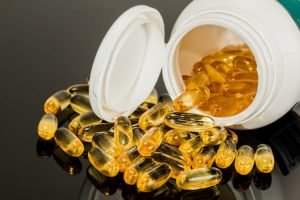
Here’s a quick rundown on what to look for in fish oil capsules. First of all, they vary as to how much of the essential ingredients they contain. Most capsules contain 1 gram of oil, but much less Omega-3 fatty acids EPA and DHA. Some contain as little as 200mg. of the Omega-3’s, which means you have to eat a LOT of capsules to get much EPA or DHA. Often the bottles will mislead you by citing the amount per serving, and when you look more carefully you will see that one serving is 3 or 4 capsules!

So you want as high a concentration of EPA and DHA as possible. You also want fish oil that has been molecularly distilled to remove any possible contaminants such as pesticides, dioxin, etc.

Although I rarely make product recommendations, I heartily recommend Trader Joe’s Fish Oil capsules. Priced at $7.99 for a bottle of 100 capsules, these capsules are molecularly distilled and contain 300 mg. of EPA, and 200 mg. of DHA per capsule. That means that 2 capsules make up 1 gram of Omega-3’s.  So it is easy to take 1 or 2 grams of Omega-3’s per day, at an affordable cost. These compare favorably with much more expensive brands of omega-3 capsules.  Another trick is to store these in the refrigerator, so the oil doesn’t turn, and occasionally break open a capsule and smell it. Although it may have a slightly fishy smell, it should smell rancid or strong.

So there you have it, a simple way to reduce heart disease, autoimmune disease, and inflammation, and improve brain health. Cost? About $0.16  per day for 2 capsules.

As always, as I am not a physician, and certainly not your physician, talk to your doctor and do your own research before consuming more than a capsule a day of fish oil.

Copyright 2008 The Psychology Lounge/ TPL Productions 

All Rights reserved (Any web links must credit this site, and must include a link back to this site)